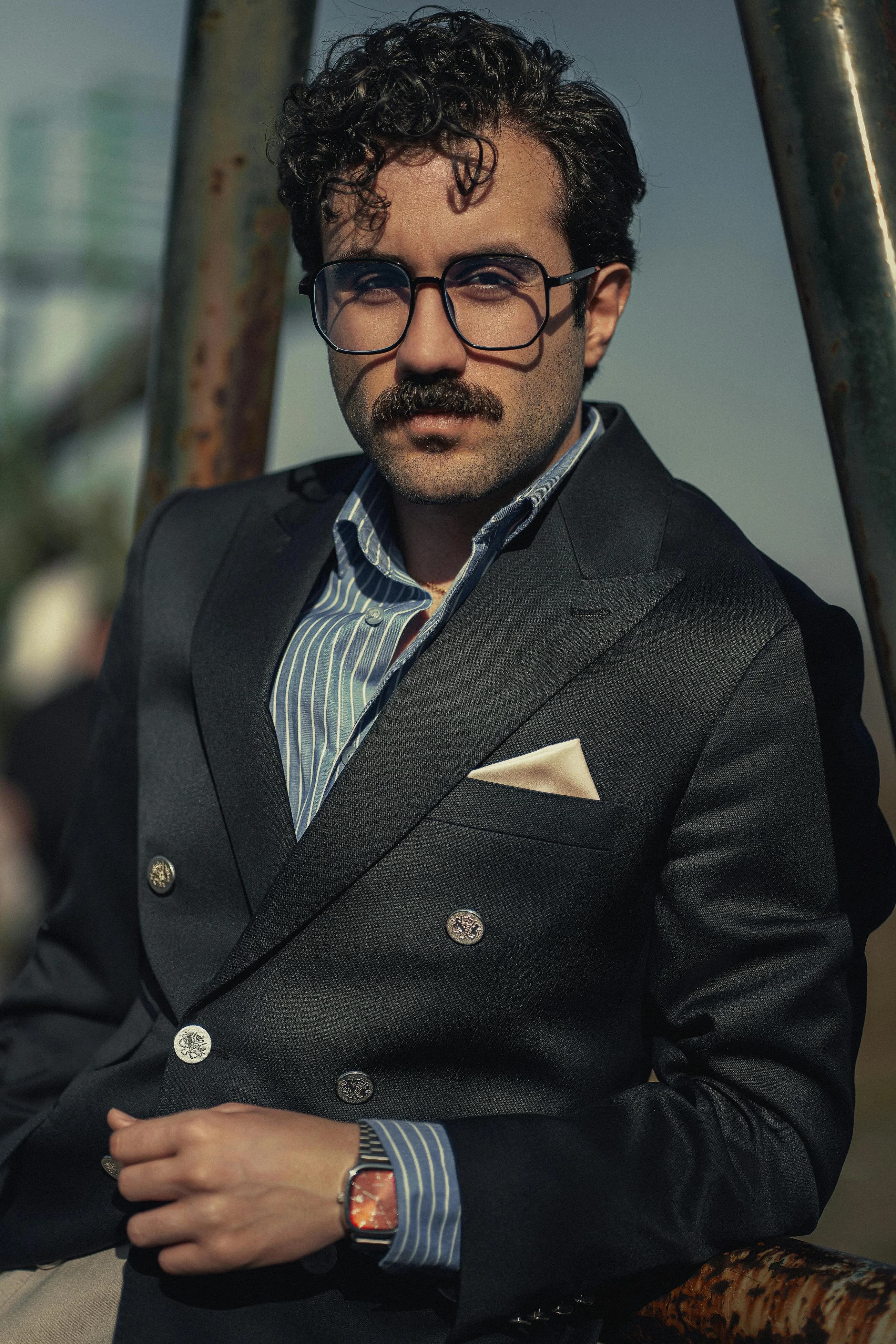
How to Buy Your First Bespoke Suit: A Complete Guide
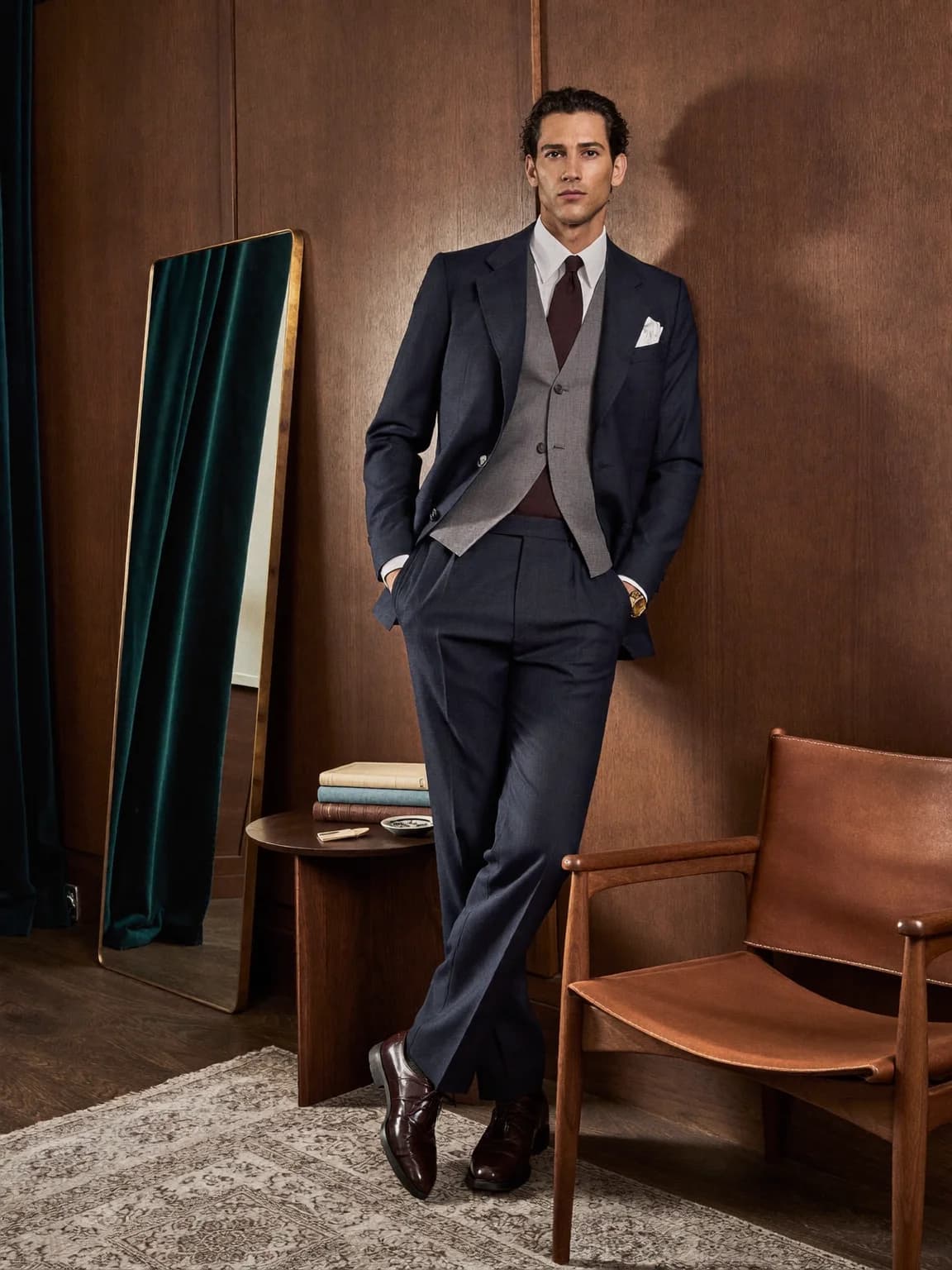

There is a moment, usually somewhere between the second fitting and the final handover, when the penny drops. You are standing in a tailor's room, looking at a jacket that was cut specifically for your body — your exact shoulder pitch, your precise chest measurement, the particular way your left side sits slightly lower than your right — and you understand, perhaps for the first time, what clothing is actually capable of.
That moment is worth pursuing. But getting there requires knowing what you are walking into.
Bespoke is the most misused word in menswear. It has been slapped onto everything from high-street suits with a small selection of fabrics to online "custom" shirts made in bulk. What follows is a guide to the genuine article: what bespoke means, what it costs, how to find the right tailor, and how to navigate the process so that the suit you receive at the end reflects both the tailor's craft and your own character.
What Bespoke Actually Means
The word comes from the English tradition of cloth being "bespoken for" — committed to a specific customer before it was cut. In its strictest definition, a bespoke suit is one that is:
- Cut from a paper pattern made uniquely for you, not adapted from a block
- Constructed largely by hand, including the canvas, the buttonholes, and the pick stitching
- Fitted through at least two in-person fittings before the coat is finished
- Built to accommodate not just your measurements but your posture, asymmetries, and personal preferences
This is distinct from made-to-measure (MTM), where a standard block is adjusted to approximate your measurements, and from off-the-rack (OTR), where you buy what is on the rail and alter it. Both MTM and OTR have their place. But they are not bespoke, and understanding the difference will prevent you from paying bespoke prices for something that is not.
Why Bespoke — and Why Now
The practical case is straightforward: a properly bespoke suit fits in ways that no other suit can. If you carry weight unevenly, have a long torso, sloping shoulders, or a full chest, bespoke is not a luxury — it is the only sensible option. A garment built around your body will always look more considered than one you have forced your body into.
The less obvious case is durability. A well-made bespoke suit, cared for correctly, will outlast five off-the-rack suits. The construction — particularly the hand-sewn floating canvas — means the jacket breathes with your body rather than fighting it, and the fabric wears more evenly over time. Many tailors will also re-cut and alter the suit years later as your body changes, something no ready-made garment can accommodate.
There is also a third case, harder to quantify: the education. Going through the bespoke process forces you to think carefully about what you want from your clothing — which silhouette suits your frame, which fabrics work for your life, which details genuinely matter to you. That knowledge will make every subsequent purchase, bespoke or not, more considered.
Setting Your Budget
Bespoke is a significant financial commitment. Understanding the range prevents surprises.
London's Savile Row remains the benchmark. Houses like Huntsman, Gieves & Hawkes, and Henry Poole typically start at £4,500–£6,000 for a two-piece suit. Anderson & Sheppard and Chittleborough & Morgan are in similar territory. These prices reflect the time — a Row coat takes between 50 and 80 hours of hand work.
Neapolitan tailors — Kiton, Cesare Attolini, Rubinacci, and smaller artisans — often charge €3,000–€6,000 for a suit. The construction philosophy differs from the English tradition: softer, more draped, lighter in the shoulder. This is a matter of taste, not quality.
Independent tailors in other cities — Paris, Vienna, Milan, New York — span a wide range, from €1,500 to €4,500, depending on the maker's reputation and the complexity of your requirements.
Visiting tailors — many respected Asian and European houses offer trunk shows in major cities, with prices often £800–£2,500. The result can be excellent, but you will typically have fewer fittings, and the relationship with the tailor is more limited.
A note on entry-level pricing: if someone quotes you under £800 for bespoke, scrutinise the claim carefully. At that price point, you are almost certainly looking at made-to-measure, regardless of what language is used. There is nothing wrong with made-to-measure — but know what you are buying.
Choosing a Tailor
This is the decision that matters most. Technique can be assessed; so can taste. The question is which of the two you should prioritise.
Assess their work, not just their reputation
Ask to see recent work. A good tailor will show you photographs, or introduce you to finished commissions where appropriate. Look at how the collar lies — it should follow the neck cleanly without gapping or pulling. Look at the chest: there should be no pulling across the button, no rippling fabric. Look at the sleeve pitch — the arm should hang naturally with no diagonal creases pulling up toward the collar.
Reputation matters, but a prestigious address does not guarantee a good fit for your body. Visit at least two or three tailors before committing.
Consider the house style
Every tailor has an aesthetic point of view. English bespoke typically produces a structured silhouette: defined chest, suppressed waist, padded shoulder. Neapolitan work is softer and more relaxed — the spalla camicia (shirt shoulder) is the signature. Florentine tailoring splits the difference. None of these is objectively correct; they suit different frames and different personalities.
Ask to see examples of suits made for clients with a similar body type to yours. A tailor who excels at slim-cut work on athletic frames may not be the right choice if you are broader in the chest.
Pay attention to the consultation
The first consultation should feel like a conversation, not a transaction. A good cutter will ask about your life — how often you sit at a desk, whether you travel frequently, whether you wear the coat buttoned or open. They should ask what you don't like about suits you've owned previously. They will look at how you stand before they take a single measurement.
If the consultation feels rushed, or if the cutter seems uninterested in your preferences, treat it as a signal.
 A navy chalk-stripe suit — disciplined cloth choice for a first commission.
Selecting the Cloth
Cloth selection is one of the most enjoyable parts of the process, and one where first-time clients often feel overwhelmed. A few principles help.
Start with weight
Cloth is measured in grams per linear metre (g/m). For most European climates and year-round wear, 280–320g is versatile: warm enough for winter, not oppressive in spring. For a lightweight summer suit, look at 200–240g. Heavier cloths — 380g and above — are for hard-wearing country suits or intense northern winters.
Understand the fibre
Super numbers (Super 100s, 120s, 150s, etc.) denote the fineness of the wool fibre. Higher numbers mean finer, softer cloth — but also less durable. A Super 150s cloth will feel extraordinarily soft at first fitting; it will also show wear and develop shine more quickly than a Super 110s. For a first suit that you intend to wear regularly, Super 110s–130s represents the optimal balance of softness and longevity.
Wool-silk blends add a subtle sheen and drape well. Wool-linen blends are breathable and ideal for warmer months but will crease more readily. Pure cashmere is extraordinary for an overcoat but impractical for a hard-worked suit.
The great mills
The finest suiting cloths come from a small number of English and Italian mills. Loro Piana, Scabal, Dormeuil, and Holland & Sherry are all reliably excellent. Huddersfield in Yorkshire is the heartland of English cloth production. Your tailor will have mill books and sample swatches — ask to see fabrics at different weights and in natural light.
For a first suit, a mid-grey or navy in a plain or subtle weave is the sound choice. Versatile, professional, and the ideal background against which to learn what you want from future commissions. There will be time for chalk stripe and windowpane checks later.
The Fitting Process
This is where bespoke earns its name. Understanding what each fitting is for will help you give better feedback — which is your most important contribution to the process.
The first fitting: the baste
The first fitting typically involves a roughly assembled garment — the jacket held together with loose basting stitches, unlined, the sleeves perhaps pinned rather than sewn. It looks unfinished because it is. Do not be alarmed.
This fitting is about structure and balance, not details. The cutter will assess whether the coat sits correctly on your body — whether it hangs plumb from the shoulder, whether the collar follows the neck, whether the chest is full enough. They will make chalk marks and pin adjustments. Your job is to tell them, honestly, how it feels: where it pulls, where it feels tight, whether the shoulder feels too wide.
Wear the shirt and shoes you intend to wear with the suit. This is not a trivial point — a different collar height changes how the coat sits on the neck; a different heel height affects where the trouser break falls.
The second fitting: the forward
At the second fitting, the jacket will be more finished — lining basted in, perhaps some of the finishing complete. The main structural questions should now be resolved. This fitting focuses on refinement: the lapel roll, the button stance, the sleeve length, the seat of the trouser.
This is the moment to express preferences about details. Do you want the button stance slightly higher? Is the trouser cut fuller or slimmer than you intended? Does the lapel roll feel too crisp — would you prefer something softer? Speak up. Tailors are not offended by specific requests; they are offended by vague feedback and then a disappointed client.
The third fitting and beyond
Many traditional houses will offer a third fitting — the coat nearly finished — before the final handover. Some clients require four or five fittings; this is not unusual and should not be treated as a mark of failure. Bodies are complex, and some corrections require iterative adjustment.
 The fitting process is iterative by design — multiple stages of adjustment produce the final result.
What to Specify
A bespoke commission gives you control over details that ready-to-wear cannot offer. Some choices that are worth considering:
Working buttonholes on the sleeve. The genuine article — hand-sewn and actually functional. A small detail that those who know menswear will notice.
The number of buttons. A single-button front creates a long, clean line. Two buttons is the classic business suit formula. Three buttons is more conservative and traditionally English.
Lining. A silk lining feels extraordinary and slides on effortlessly. It is also more delicate. Bemberg (a cupro rayon) is a practical alternative. Some tailors offer half-lining for warmer climates.
Ticket pocket. A small extra pocket above the hip pocket on the right side. Originally for train tickets. Now largely decorative, but a subtle signal of sartorial engagement.
Trouser details. Whether you prefer a plain bottom or a turn-up (cuff), forward pleats or flat front, side adjusters or belt loops — all of this is your decision. For a first suit, a single forward pleat with a modest turn-up is a sensible, versatile choice.
Care and Longevity
A bespoke suit is an investment that rewards attentive care.
Rotate it. Wearing the same suit on consecutive days prevents the wool from recovering its shape. Two days on, two days off is the minimum.
Brush it after every wear. A natural-bristle clothes brush removes surface dust and food particles before they work their way into the fibres. This is the single most effective care habit you can develop.
Press sparingly. Steam is the enemy of canvas construction over time. A professional press once a season is appropriate; pressing after every wear damages the fabric. Between presses, hang the suit in the bathroom during a hot shower — the steam relaxes creases naturally.
Dry clean infrequently. Dry cleaning is hard on wool. Once or twice per year for a suit worn regularly; less if it is well-brushed and rotated.
Cedar blocks in the wardrobe. Natural moth deterrent. Replace or re-sand them annually.
Keep the original box or get a proper suit carrier. Folding a bespoke suit into a drawer is a waste of what you have spent. A breathable suit carrier and a good wooden hanger are small expenses that protect a significant one.
The Right Time to Commission
The conventional wisdom is that you should commission your first bespoke suit when you are settled in your body — not actively gaining or losing significant weight — and when you have worn enough suits to have genuine opinions about fit and style.
This is sound advice. The more precisely you can articulate what you want, the better the result. A client who says "I find most suits pull across the back when I lift my arm" gives the cutter far more to work with than one who says "just make it fit well."
That said, there is no perfect moment. The process itself is educational, and even a first commission that does not fully satisfy you will teach you things about your body and preferences that make every subsequent suit better.
A Word on Patience
The timeline from first consultation to finished suit is typically twelve to sixteen weeks at most traditional houses, and longer during busy periods. Some houses have waiting lists. This is not an inconvenience — it is part of what you are paying for. The cloth has to be ordered, the pattern cut by hand, the body of the coat built up through multiple stages of construction before the first fitting is even possible.
Approach the process as you would a relationship rather than a transaction. The tailors who produce the most remarkable work are those who know their clients well — their habits, their quirks, the way their posture has changed over years. The first suit is the beginning of that knowledge, not the culmination of it.
Summary: What to Remember
- Verify the definition: true bespoke involves an individual pattern, multiple fittings, and substantial hand construction. Ask directly.
- Budget realistically: expect to spend at least £1,500–£2,000 for genuine bespoke from an independent tailor; considerably more for an established house.
- Choose the tailor before the cloth: technique and taste matter more than prestige.
- Be specific in fittings: vague feedback produces average results. Know what you want to say.
- Start with versatile cloth: navy or mid-grey, Super 110s–130s, 280–320g. Leave experimentation for later commissions.
- Care for it properly: brush regularly, press sparingly, dry clean rarely.
- Be patient: the timeline is part of the process, not an obstacle to it.
If you are researching specific tailors, our Brand Register covers established houses across London, Naples, Paris, and Vienna, with notes on house style and price positioning. For an overview of construction terms referenced in this guide, see our Garment Lexicon.